A debate built on a false choice
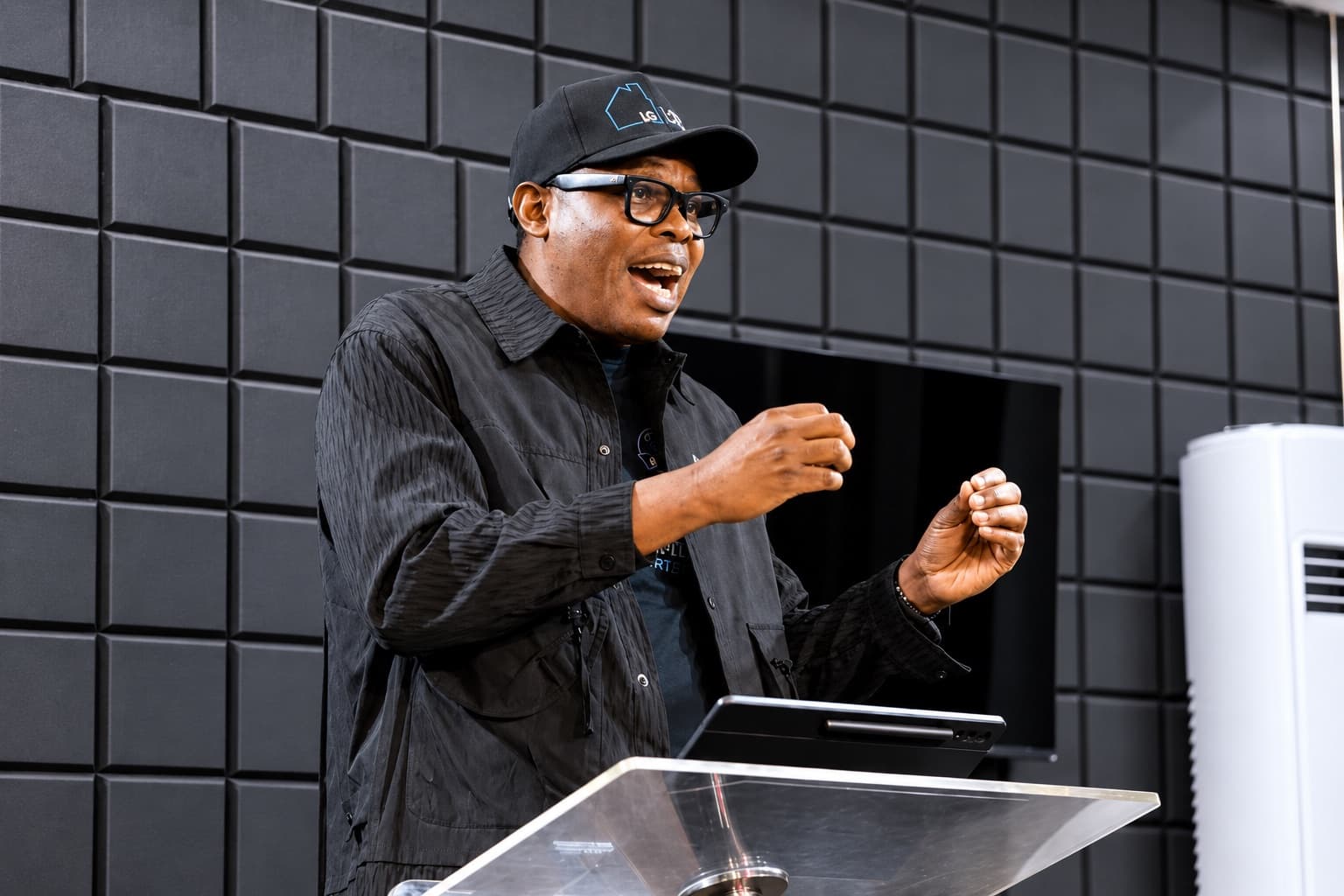
This past week, Nigerian social media was set ablaze by an exchange between Apostle Arome Osayi and the activist Martins Vincent Otse, popularly known as VeryDarkMan. In a sermon, Apostle Arome described revival as Nigeria's national calling, contrasting the country's spiritual purpose with China's technological achievements. VeryDarkMan reacted sharply. He argued that such preaching keeps Nigerians focused on church activities instead of innovation, creativity and practical solutions to the nation's problems.
The exchange quickly turned personal, and many voices joined in on both sides. But beneath the noise lies a question every Nigerian should take seriously: must we choose between revival and development?
I understand VeryDarkMan's frustration. Nigeria is one of the most religious nations on earth, yet we still struggle with corruption, insecurity, epileptic power supply and a crippled manufacturing sector. Anyone who loves this country has a right to ask why our churches are full while our factories are empty.
But the question rests on a false choice. It assumes that revival pulls people away from productive life. The Bible teaches the opposite, and history agrees. To see why, we must go back to the very beginning, before the need for revival ever arose.
The first mandate: develop the earth
Long before sin entered the world, God had already defined man's purpose. It was to develop the earth and govern it according to His will.
And God blessed them, and God said unto them, Be fruitful, and multiply, and replenish the earth, and subdue it: and have dominion...
And the LORD God took the man, and put him into the garden of Eden to dress it and to keep it.
Notice that Eden was not a prayer camp. It was a workplace. Adam was given a garden to cultivate, animals to name and an earth to subdue. Work was not a punishment that came with the fall. It was part of God's original design.
This mandate carried two clear assignments:
- To explore the earth's resources fully. Everything God placed in the ground, in the seas and in the skies was meant to be discovered.
- To use those resources to improve human life and develop the earth, always according to the will of God.
The crude oil in the Niger Delta, the limestone in Ogun, the tin in Jos, the fertile soil of Benue and the creative minds of millions of young Nigerians are all part of this same mandate. They are gifts waiting to be developed.
Why utopia keeps escaping us
If man fulfils this mandate, the result is what humanity has always dreamed of: utopia, a world of great prosperity and perfect peace. Yet that dream has consistently proven beyond our grasp.
It is telling that when Sir Thomas More coined the word "utopia" in 1516, he built it from Greek roots meaning "no place." Even the name admits that such a world does not exist.
Humanity has tried hard to build it. After the First World War, the nations formed the League of Nations in 1920 to guarantee lasting peace. Within twenty years, the world was plunged into the Second World War, which claimed tens of millions of lives. The United Nations rose from those ashes in 1945 with the same noble goal. Eighty years later, wars still rage across continents, and nations still spend trillions of dollars every year on weapons.
We have achieved astonishing progress. We have split the atom, mapped the human genome and put computers in our pockets. Still, peace and shared prosperity remain out of reach. Why?
The answer is simple. Man's fallen nature, corrupted by sin, makes him incapable of creating utopia by his own strength. Sin has turned humanity's greatest dream into a mirage.
Imagine a world without sin
Pause and ask yourself: what would a world without sin have, and what would it lack?
A world without sin would be a world without evil. It would have no guns aimed at the innocent, no kidnappers on our highways, no bandits in our villages and no weapons of mass destruction. It would know nothing of criminal tendency, suspicion, mistrust, jealousy, greed or envy. It would be free of the suffering and negativity that have turned so much of today's world into a tragedy.
But here is the catch. A world without sin would still have skyscrapers, aeroplanes, cars, industries, hospitals and every invention that has improved the quality of human life.
In fact, the technology behind them would be even better. Today we build cars that burn petrol, pollute our air and warm our climate. We build factories that poison rivers, as communities in the Niger Delta know too well. A humanity free from sin would have the wisdom to build technology that serves man without injuring him or the earth he lives on.
So picture it: all the progress and comfort we enjoy, but none of the evil, suffering and destruction. Is this not the very definition of utopia? A world of great prosperity and perfect peace.
Sin makes man destructively productive
The problem with our world is not the things we have built to make life better. The problem is what we have done with them. Because of our sinful nature, we have turned our greatest achievements into instruments of oppression and wanton destruction.
History is full of proof:
- Nuclear science can light up entire cities. It was also used to destroy Hiroshima and Nagasaki in 1945.
- Dynamite was invented to help build roads, tunnels and mines. It soon became a weapon of war, a fact that so troubled its inventor, Alfred Nobel, that he left his fortune to fund the Nobel Prizes, including one for peace.
- The internet and social media connect billions of people and power new businesses. They also spread fraud, scams, hate and falsehood at lightning speed.
- Our own crude oil should have made Nigeria one of the most developed nations on earth. Instead, too much of its wealth has been stolen, and too many of its communities have been left polluted and poor.
This leads to a truth we must grasp: sin does not make a man unproductive. It makes him destructively productive. A sinful man can build great things. He simply cannot be trusted with them, and so he never fully enjoys the benefit of what God has given.
Therefore, remove sin and you remove the root of the problem. Sin is the problem.
What revival actually does
How can sin be removed? This is why Jesus came, and this is why revival is needed. Revival deals with sin at its root. It restores the human spirit and turns a destructively productive man into a constructively productive one.
Scripture shows this transformation clearly:
Let him that stole steal no more: but rather let him labour, working with his hands the thing which is good.
Revival does not turn a thief into an idle worshipper. It turns him into a worker. The same Bible says that "if any would not work, neither should he eat" (2 Thessalonians 3:10), and that a man diligent in his business "shall stand before kings" (Proverbs 22:29). When God needed the tabernacle built, He filled Bezalel with His Spirit "in wisdom, and in understanding, and in knowledge, and in all manner of workmanship" (Exodus 31:3). The first person the Bible describes as filled with the Spirit of God was a craftsman.
History confirms it too:
- The Wesleyan Revival in 18th-century Britain reformed drunkards and gamblers into sober, hardworking citizens. The French historian Élie Halévy famously argued that Methodism helped spare England a violent revolution like France's.
- The abolition of the slave trade was driven by men like William Wilberforce, whose evangelical conversion fuelled his decades-long campaign that ended Britain's slave trade in 1807.
- The Welsh Revival of 1904–1905 was widely reported to have emptied taverns, cleared court lists and restored broken homes. Debts were repaid and stolen goods returned.
- Right here in Nigeria, the missionary movement gave us some of our earliest schools and hospitals. CMS Grammar School, Lagos, founded in 1859, is Nigeria's oldest secondary school. Hope Waddell Training Institution in Calabar trained generations of leaders, tradesmen and professionals.
The sociologist Max Weber went further. In 1905 he argued that the Protestant work ethic, which treated diligent work as a calling from God, helped fuel the rise of modern capitalism in the West.
The pattern is consistent. Genuine revival does not stop productivity. It purifies it, multiplies it and points it toward the common good. Before man fell, he was commanded to develop the earth. Revival does not cancel that assignment. If it does anything at all, it helps us do it better and enjoy it fully.
A word to both sides
To the critics: your concern for Nigeria's development is valid, and you are right to demand results. But the fact that Nigeria has many churches and still struggles does not prove that revival has failed. It proves that we have had a great deal of religion without enough true revival. Religion fills buildings. Revival transforms lives. A nation of genuinely transformed people would not tolerate the theft of public funds, the abandonment of factories or the neglect of our schools.
To the Church: we must take the criticism seriously, because it contains a challenge we cannot ignore. If revival is real, it must be visible outside the church auditorium. It should show in honest civil servants, excellent engineers, faithful contractors, innovative entrepreneurs and leaders who serve rather than steal. Prayer must never become an excuse for idleness, and church attendance must never replace productivity. Jeremiah urged God's people even in exile to "seek the peace of the city" and to build, plant and prosper there (Jeremiah 29:5–7).
The proof of revival is not the size of our crusades. It is the quality of our citizens.
Nigeria needs revival that builds
So, is Nigeria's calling revival or development? The honest answer is both, in the right order. Revival deals with the heart of man. Development deals with the work of his hands. When the heart is right, the hands build better.
A revived Nigeria would not be a nation that only prays. It would be a nation that prays and produces, worships and works, fasts and builds. It would explore its resources fully, manage them honestly and share their benefits fairly. It would pursue progress with peace.
That is the kind of revival Nigeria needs: not one that empties our offices and fills only our altars, but one that fills our altars and transforms our offices, our markets, our factories and our government houses. Revival does not stop us from building the nation. It makes us builders who can finally be trusted with what we build.